
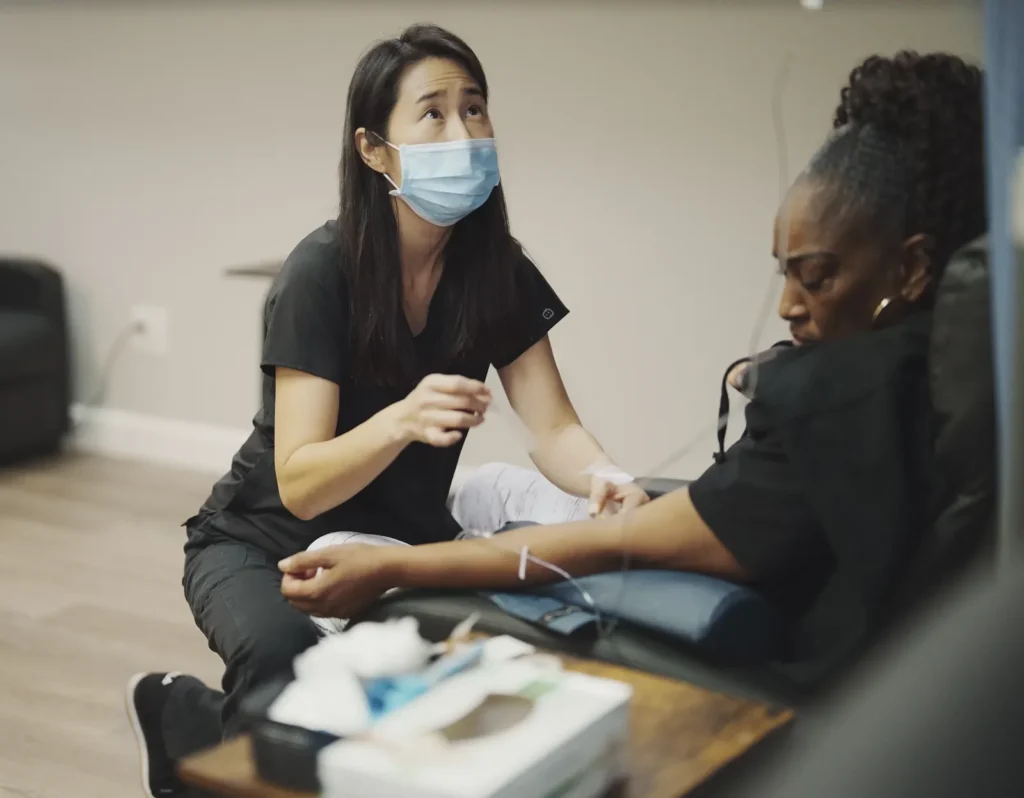
A bruise where your IV was placed, often called IV bruising, is a common, usually minor, side effect of a drip. Here is why it happens, what it usually looks like as it fades, what you can do at home, and which signs mean you should call a doctor. It’s written for anyone who has had an IV, at K Wellness in Long Beach or anywhere else.
In short
- A bruise at the IV site usually means a small amount of blood leaked out of the vein into the tissue under the skin.
- A bruise changes color as it fades, from pinkish red to blue, then greenish yellow, then back to your normal skin color.
- MedlinePlus suggests a cold pack wrapped in a clean towel, for up to 15 minutes each hour, and keeping the arm raised.
- Cleveland Clinic says to call a doctor if the pain gets worse, the area swells or feels warm, you develop a fever, or there’s drainage from the spot.
- Before your IV, tell us if you take blood thinners or have had problems with IVs or blood draws before.
Why an IV can leave a bruise
MedlinePlus, the National Library of Medicine’s health site, describes a bruise as an area of skin discoloration that forms when small blood vessels break and leak into the soft tissue under the skin. (MedlinePlus: Bruise, reviewed April 2025)
An IV starts with a needle in a vein, the same as a blood draw. For blood tests, MedlinePlus notes that you may have slight pain or bruising where the needle went in, and that most symptoms go away quickly. (MedlinePlus, updated October 2024)
Sometimes the vein itself is injured by the needle. Cleveland Clinic calls this a blown vein and lists bruising, swelling, discoloration, tenderness and discomfort among the signs. It names these causes: (Cleveland Clinic: Blown Vein, updated January 2023)
- Movement, even slight, when the needle goes in.
- A vein that rolls to the side, away from the needle.
- Veins that are more fragile, which happens naturally with age and can also follow long-term IV use.
- A needle that is too large for that particular vein.
How long IV bruising lasts
MedlinePlus explains that a bruise starts out pinkish red and may be tender, then turns bluish, then greenish yellow, and finally returns to your normal skin color. It also notes that bruises can last from days to months.
For a blown vein, Cleveland Clinic says it usually recovers in about 10 to 12 days, and that the vein shouldn’t be used again until it has. Cleveland Clinic’s page on hematomas advises seeing a provider for bruising that doesn’t clear up within two weeks. (Cleveland Clinic: Hematoma, updated November 2024)
What you can do at home
These steps come from MedlinePlus’s general guidance on bruises and from Cleveland Clinic’s page on blown veins. If you aren’t sure what’s right for you, ask your doctor.
- Cold pack: wrap ice in a clean towel and hold it on the spot for up to 15 minutes each hour. Don’t put ice directly on your skin.
- Raise the arm: keep it above the level of your heart when you can.
- Go easy on that arm: avoid lifting anything heavy with it until the soreness goes away.
When to call a doctor
Contact a doctor if any of these apply
- The pain gets worse instead of better.
- The area swells or feels warm to the touch.
- You develop a fever.
- There’s drainage from the spot, or you see streaks of redness or pus.
- The bruise hasn’t cleared up within two weeks.
- You bruise often without knowing why.
MedlinePlus says to contact a doctor right away if you feel extreme pressure in the bruised area, especially if it’s large or very painful, because it can be serious and needs emergency care. In an emergency, call 911.
These signs come from Cleveland Clinic’s blown vein and hematoma pages and from MedlinePlus’s bruise page. If something like this happens after a visit with us, call us too, at (562) 269-0300.
Before your IV: what to tell us
Before treatment, our medical assistant asks about your health conditions and anything you’re taking. Bring a list of your medications and supplements, and tell us about any allergies or recent surgery. It isn’t a medical evaluation, and IV therapy isn’t right for everyone, so if you’re unsure whether it’s safe for you, ask your doctor first.
Two things are worth mentioning because they relate to bruising:
- Blood thinners. MedlinePlus notes that bleeding is the most common side effect of blood thinners, and lists unusual bruising among the signs to call your provider about. (MedlinePlus: Blood Thinners, updated June 2024)
- Past problems with IVs or blood draws. Cleveland Clinic suggests telling the person placing your needle if you have a history of blown veins, and trying to stay calm and still while the needle goes in.
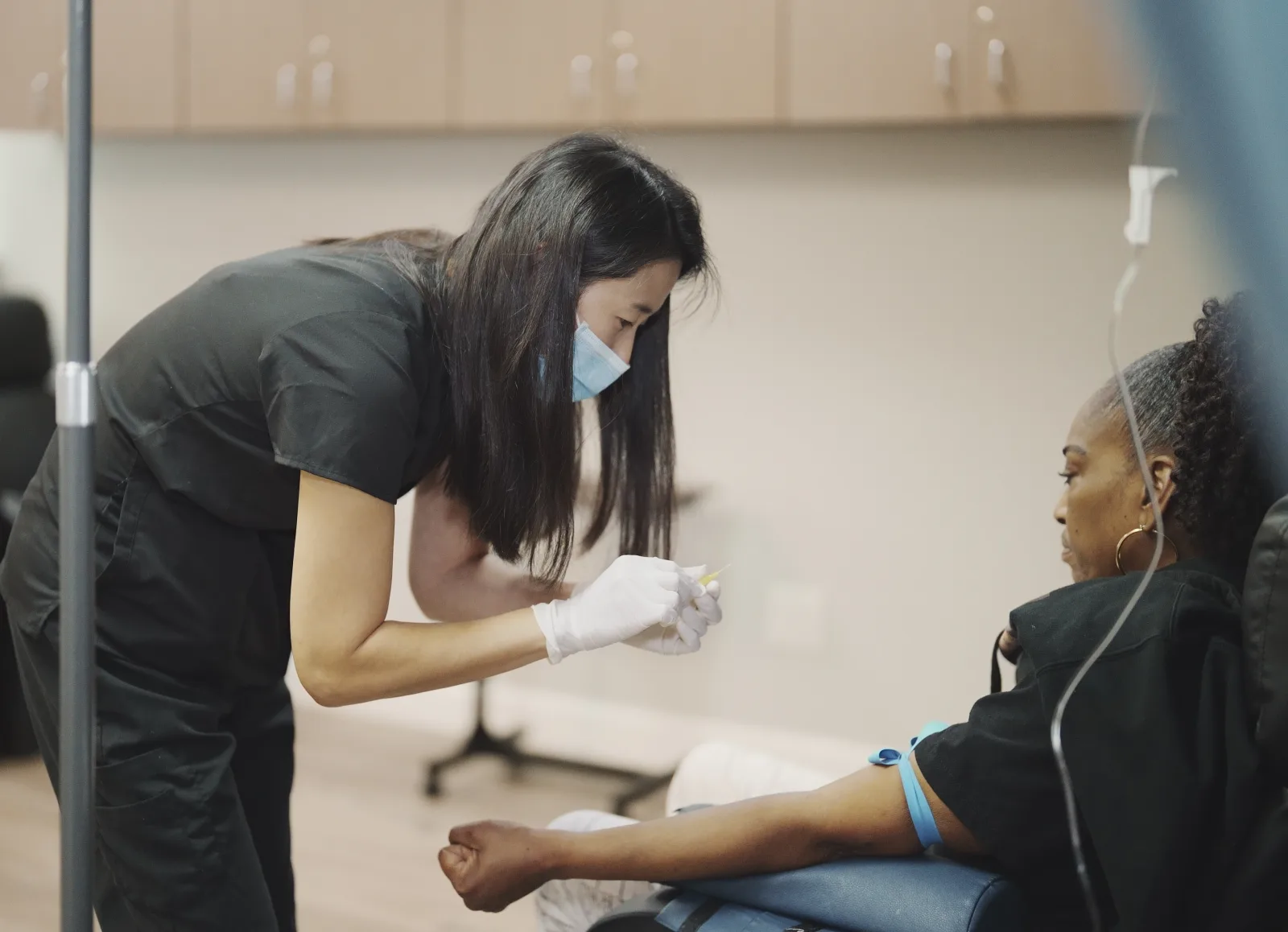
A licensed vocational nurse (LVN) places the IV, usually in your arm. When your drip is done, we remove the IV and place a small bandage. For more on what can happen during a drip, see is IV therapy safe?
Your visit
K Wellness is inside Kim Holistic Foot & Ankle Center at 701 E 28th St #111, Long Beach, CA 90806. The two have the same owner and share the same office.
- How long: a drip takes about 45 minutes on average, depending on your veins. Plan on 45 to 60 minutes for a first visit. More on timing.
- What’s on the menu: drips from $150 and IV push from $100. See the IV menu.
- Parking: park in our parking structure. There’s a K Wellness sign outside our door, so you don’t need to go through the main lobby.
- Booking: call (562) 269-0300, or request a visit online and we’ll call you to confirm a time.
Common questions
Is it normal to bruise after an IV?
Bruising at the IV site is a common, usually minor, side effect. It happens when a small amount of blood leaks out of the vein into the tissue under the skin.
How long does IV bruising last?
A bruise changes color as it fades, and MedlinePlus notes that bruises can last from days to months. Cleveland Clinic advises seeing a provider if a bruise hasn’t cleared up within two weeks.
What helps a bruise after an IV?
MedlinePlus and Cleveland Clinic suggest wrapping ice in a clean towel and holding it on the spot for up to 15 minutes each hour, keeping the arm raised when you can, and avoiding heavy lifting with that arm until the soreness goes away. If you aren’t sure what’s right for you, ask your doctor.
When should I worry about a bruise after an IV?
Cleveland Clinic advises contacting a doctor if the pain gets worse, the area swells or feels warm, you develop a fever, or there’s drainage from the spot. MedlinePlus says to contact a doctor right away if you feel extreme pressure in the bruised area.
What is a blown vein?
Cleveland Clinic describes a blown vein as a blood vessel that’s damaged by a needle insertion. Signs include bruising, swelling, discoloration and tenderness, and it usually recovers in about 10 to 12 days.
Can I get an IV again if I bruised last time?
Tell us before your next visit. Cleveland Clinic notes that a vein that was injured shouldn’t be used again until it has recovered.
This article is general information, not medical advice. It is not intended to diagnose, treat, cure or prevent any disease. Talk with your own doctor about your health. In an emergency, call 911.